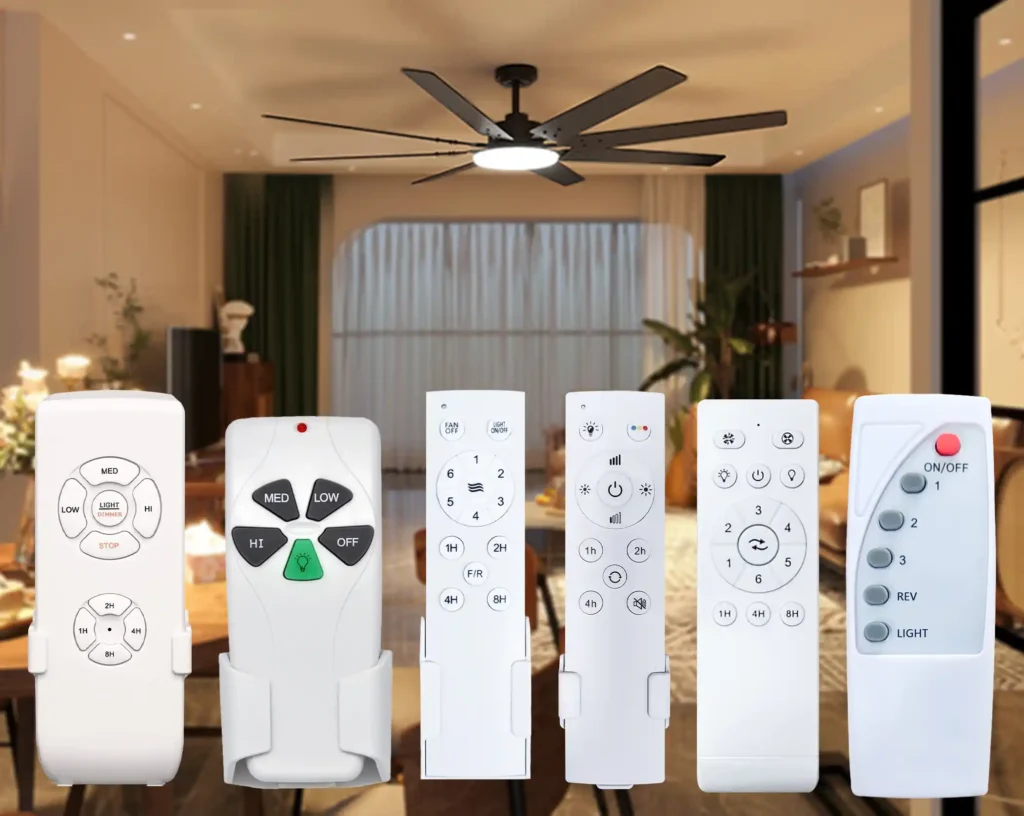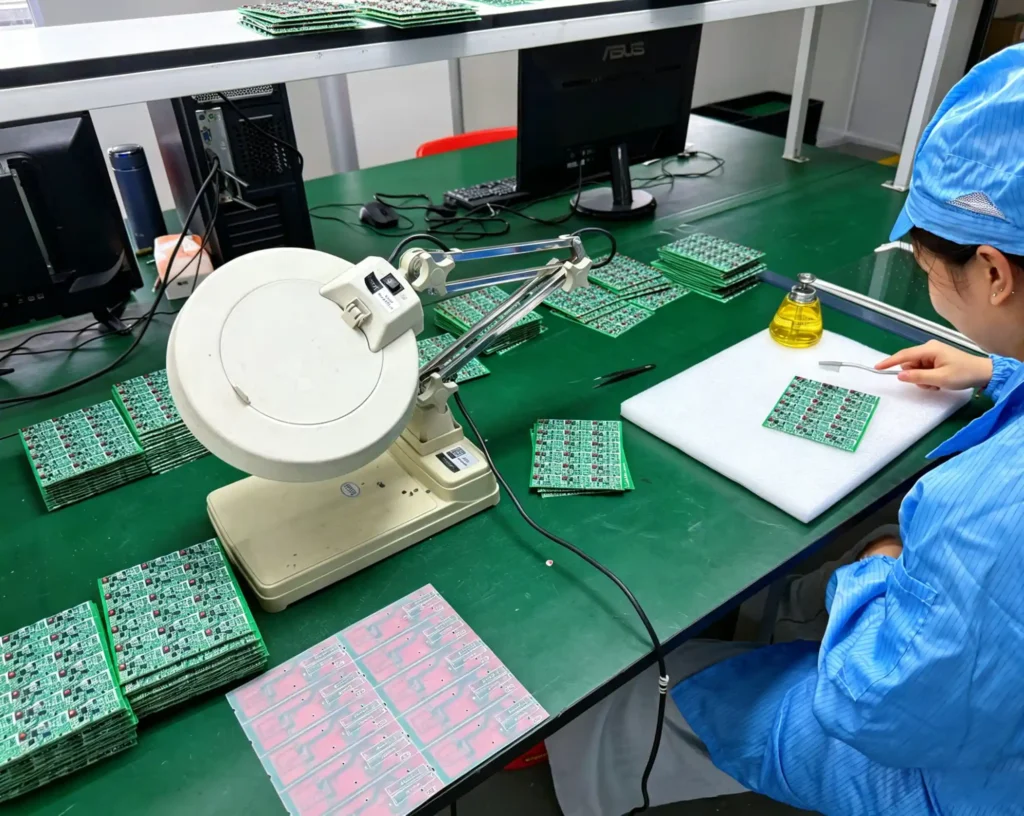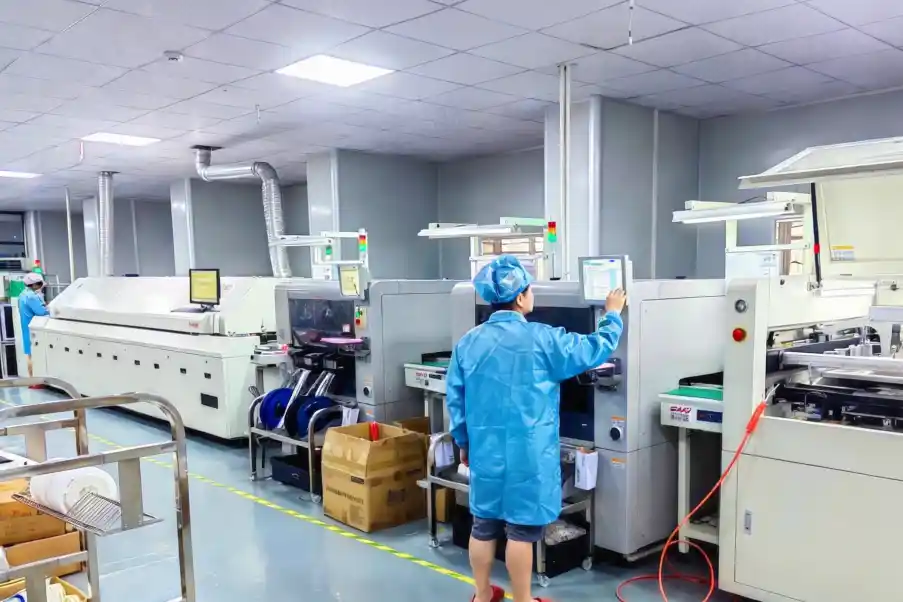
You have a product line to build, a customer base to serve, or a ceiling fan brand to grow. You need ceiling fan remote controls in bulk, and you need them to work every time. Every factory promises good quality, fast delivery, and great pricing. Then samples arrive. Buttons stick. Receivers buzz. Frequencies drift. One bad batch can cost you returns, bad reviews, and lost distributor trust. Choosing a manufacturer from a website quote alone is a gamble you cannot afford.
A reliable ceiling fan remote manufacturer does the following:
- Shows clear quality control1 processes.
- Holds the needed safety certifications.
- Delivers consistent product performance across batches.
- Provides responsive after-sales support.
- Has proven experience making ceiling fan remote controls and receiver kits for real-world use.
Look beyond price lists. Ask about testing protocols, component sourcing, minimum order quantities, and customization capabilities before you commit.
This article walks you through the key factors. Whether you are a distributor, brand owner, purchasing manager, or wholesaler, these criteria will help you separate dependable suppliers from risky ones.
Why Does the Right Ceiling Fan Remote Manufacturer Matter for Your Business?
Choosing a ceiling fan remote manufacturer is not just about the lowest unit price. It affects your whole business.
A reliable manufacturer gives you consistent product quality. Your repeat order six months later should look, feel, and perform just like the first batch. Inconsistent quality confuses your customers and hurts your brand.
A good manufacturer also gives you stable supply. Ceiling fan remotes use many components: microcontrollers2, RF modules, relays, capacitors, housings, and battery connectors. If a factory does not manage its component supply chain well, lead times can stretch from weeks to months. Ceiling fans sell best in spring and summer. Delayed shipments mean lost sales.
After-sales support matters too. What happens when a customer reports a pairing problem or a receiver failure? A responsible manufacturer provides troubleshooting guides, replacement policies, and technical help. A factory that disappears after shipping leaves you alone with customer complaints.
What Certifications Should a Ceiling Fan Remote Manufacturer Have?
Certifications are not just paperwork. They show that a factory’s products passed recognized safety and performance tests.
| Certification | What It Covers | Why It Matters |
|---|---|---|
| FCC3 (USA) | Radio frequency emissions, electromagnetic interference | Required for legal sale in the United States; ensures the remote does not interfere with other devices |
| CE4 (Europe) | Safety, health, and environmental protection standards | Required for the European market |
| UL / ETL | Electrical safety of the receiver and control components | Critical for products that connect to home AC wiring; many retailers and distributors require it |
| RoHS5 | Restriction of hazardous substances in electronic components | Required in many markets; shows environmental compliance |
| ISO 90016 | Factory quality management system | Indicates standardized production and quality control processes |
Ask the manufacturer for actual certification documents, not just logos on a website. Check the certificate validity period and the product categories covered. A factory that hesitates to share details or gives you expired documents is a red flag.
For ceiling fan remote controls sold in North America, FCC certification is a must. If the receiver kit connects to household wiring, an ETL or UL listing for the receiver module adds safety assurance. It also makes selling through retail channels easier.
How Can You Evaluate the Quality of a Ceiling Fan Remote Manufacturer?
Quality evaluation goes beyond looking at a sample. You need to understand how the manufacturer builds quality into every batch.
Ask About Testing Protocols
A reliable ceiling fan remote manufacturer should describe its testing process clearly. Here are questions to ask:
- Do you test every unit before shipping, or only batch samples?
- How do you test RF range and signal stability?
- How do you verify button durability for repeated use?
- What temperature and humidity conditions do you test under?
- How do you check receiver load capacity under real fan and light conditions?
Good manufacturers perform a powered functional test on every single remote and receiver before packing. Some also run aging tests. Receivers run non-stop for 24 to 48 hours to catch early failures.
Inspect Component Quality
The parts inside the remote and receiver determine long-term reliability. Ask about:
- Microcontroller brand and grade: Industrial-grade microcontrollers handle temperature changes better than commercial-grade ones.
- Relay quality: The receiver’s fan and light relays must be rated well above the expected load. A cheap relay can fail after repeated switching.
- RF module: A stable frequency from batch to batch prevents future pairing problems.
- Capacitor ratings: Capacitors rated for higher temperatures last longer inside enclosed fan canopies.
Request a Factory Audit or Third-Party Inspection
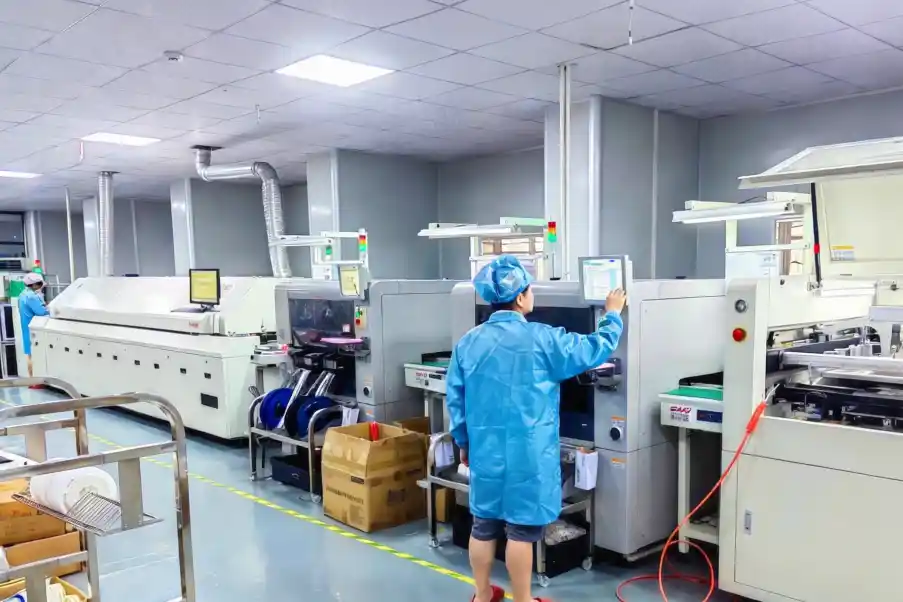
If your order volume is large enough, consider a factory visit or a third-party inspection7. Photos and videos cannot show everything. You need to see the production line, worker training, equipment maintenance, and real quality control.
What Should You Ask About Product Customization?
Many buyers need more than an off-the-shelf remote control. Customization shows a manufacturer’s true capabilities.
Common Customization Options
| Customization Type | What to Ask |
|---|---|
| Remote housing design | Can you create a custom remote shell? What are the mold costs and lead times? |
| Branding and logo | Can you print or emboss our logo on the remote and packaging? |
| Button layout and function labels | Can you customize the button arrangement and label text for our fan models? |
| Frequency selection | Do you offer fixed or multi-frequency options to avoid interference? |
| Receiver size and form factor | Can you design the receiver to fit our specific fan housing dimensions? |
| Packaging design | Can you provide custom retail packaging with our branding and barcode? |
| Manual and documentation | Can you create instruction manuals in our language with our branding? |
Not every manufacturer offers the same level of customization. Some only do logo printing. Others have in-house mold design, PCB layout, and packaging design teams. Match your manufacturer to your real customization needs.
What Minimum Order Quantity Should You Expect?
MOQ varies between manufacturers. It depends on whether you buy standard products or custom-designed ones.
| Product Type | Typical MOQ Range |
|---|---|
| Standard off-the-shelf remote kits | 100 to 500 units |
| Custom-branded standard products | 500 to 1,000 units |
| Custom remote housing with new mold | 2,000 to 5,000 units |
| Fully custom design (housing + PCB) | 3,000 to 10,000+ units |
A very low MOQ for fully custom work may signal shortcuts. Custom development requires mold costs, PCB design, testing, and certification. A factory that absorbs all those costs for a 500-unit order might cut corners.
At the same time, a reliable manufacturer should let you start with a reasonable trial order of standard products. This way, you can test quality before committing to large volumes.
How Important Is After-Sales Support from a Ceiling Fan Remote Manufacturer?
After-sales support is a clear signal of reliability. It is also often overlooked during supplier selection.
Before placing an order, test the manufacturer’s responsiveness:
- How fast do they reply to technical questions?
- Do they provide clear troubleshooting guides and pairing instructions?
- What is their defective product return and replacement policy?
- Do they offer spare parts like replacement remotes or receivers for warranty claims?
- Will they provide installation videos or wiring diagrams for your customers?
A manufacturer slow to respond during the sales stage will be even slower after delivery. Good after-sales support reduces your workload. When a customer calls you with a pairing problem, you should be able to solve it with documentation from the manufacturer or quickly get help from a support contact.
Should You Choose a Manufacturer That Specializes in Ceiling Fan Remotes?
General electronics factories make many products. Specialist ceiling fan remote manufacturers focus on one category. The difference matters.
A specialist understands:
- How different motor types (AC vs. DC) affect receiver compatibility.
- Why receiver size and shape matter for fitting inside fan canopies and mounting brackets.
- How fan speed capacitor wiring interacts with remote control receivers.
- What happens when a remote controls fan speed and light dimming on the same circuit.
- Common installation problems that users and electricians face.
This knowledge leads to better product design and more useful technical support. A specialist can tell you right away if their receiver works with a three-speed AC fan and a separate light kit.
General electronics factories can make remotes, but they may miss the specific design details that make installation easy and everyday use reliable.
Frequently Asked Questions
How do I verify a ceiling fan remote manufacturer is real and not a trading company?
Ask for the factory address. Request a live video tour of the production line. Check business licenses. Look for in-house capabilities like PCB assembly8, mold making, or testing equipment. A trading company can deliver products but often lacks quality control depth and technical support.
What is the typical lead time for ceiling fan remote orders?
For standard products, lead times range from 15 to 35 days. This depends on order volume and factory schedule. Custom projects with new molds or PCB designs can take 45 to 90 days. This includes sampling and approval cycles.
Can one ceiling fan remote work with different fan models?
Yes, universal ceiling fan remote kits work with most AC ceiling fans, regardless of brand. They include a receiver that wires into the fan housing. DC motor fans need remotes designed specifically for them. DC fans use different control electronics.
How do I handle defective units from a manufacturer?
Agree on a defect rate limit and replacement policy before ordering. Reliable manufacturers often include a small overage percentage in shipments. They provide replacements or credit for defective units reported within the warranty period, usually 12 to 24 months.
Should I order samples before placing a bulk order?
Always. Order at least a few production samples, not just pre-made sales samples. Test them on actual ceiling fans under real conditions. Include range testing through walls and multiple on/off cycles over several days.
Conclusion
To choose a reliable ceiling fan remote manufacturer, verify what matters: certifications, quality control systems, component choices, after-sales commitment, and product experience. Ask the right questions. Test samples thoroughly. Evaluate how the manufacturer communicates. A supplier that supports your business after the sale is far more valuable than one that only offers a lower unit price.
To learn more about ceiling fan remote control products, sourcing options, and product knowledge, visit https://huashifs.com.
- Wikipedia article explaining quality control processes.
- Wikipedia article detailing microcontrollers.
- Official website of the Federal Communications Commission (FCC).
- Official European Commission page on CE marking.
- Official European Commission page regarding the RoHS directive.
- Official ISO page for ISO 9001 quality management systems.
- Wikipedia article explaining third-party inspection.
- Wikipedia article on printed circuit board (PCB) assembly.