
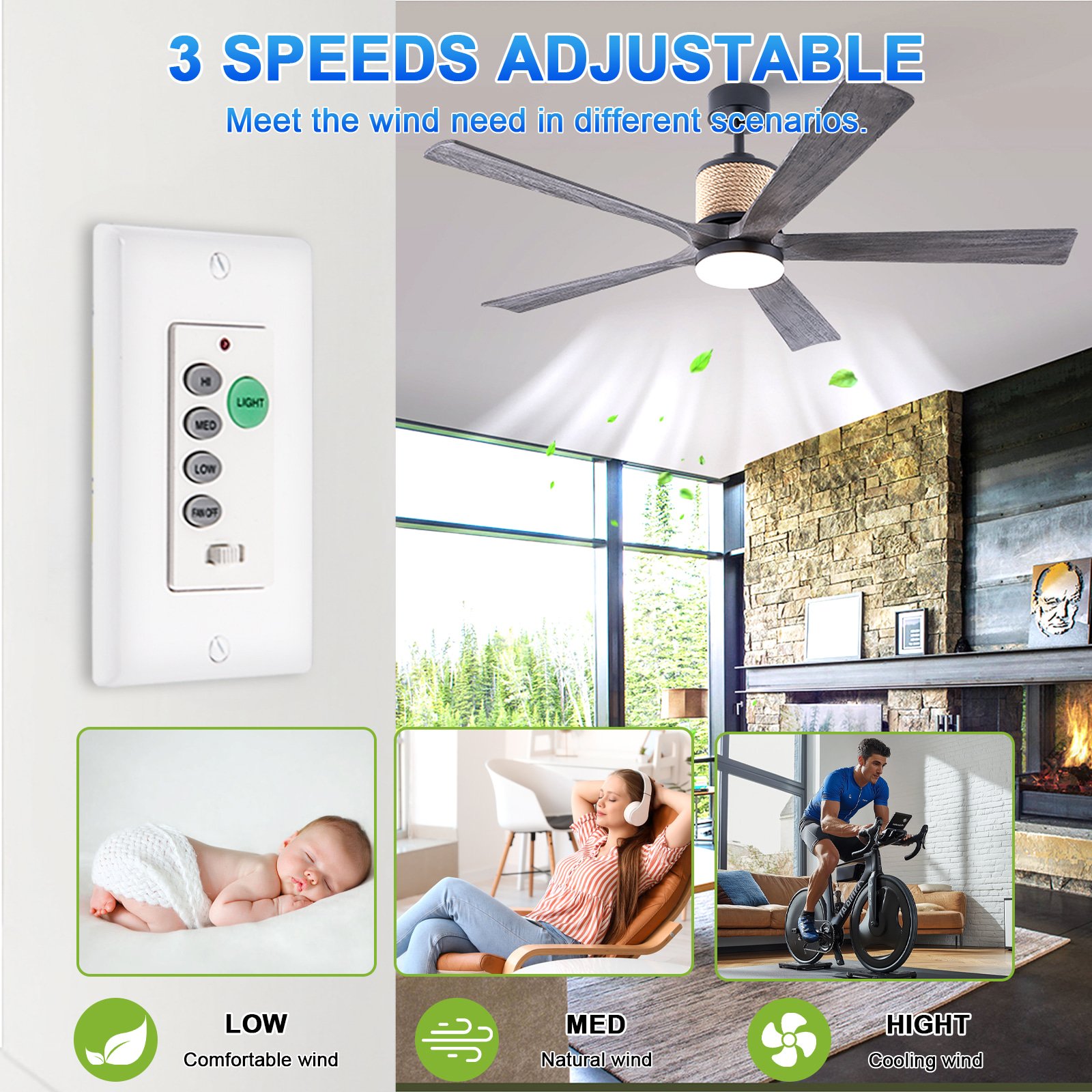
You found a great ceiling fan wall control from an overseas factory. The price is right, and the samples look solid. You are ready to place your first order. Then a colleague mentions FCC, UL, CPSC, and NEC. Suddenly, you wonder if your product can legally enter the United States. If you get compliance wrong, customs can hold your shipment. Retailers might reject it, or you might face a product recall that ruins your business.
To legally import and sell a ceiling fan wall control in the US, your product needs UL safety certification (or an equivalent NRTL listing). It also needs FCC compliance, CPSC conformity, and NEC compatibility. You must back these with proper test reports and a valid Certificate of Compliance.
This guide covers every compliance layer US importers must clear for ceiling fan wall controls. Whether you import wired switches, RF wireless transmitters, or smart Wi-Fi controls, you will learn what you need. You will understand the exact certifications, the customs documents, and how to verify your supplier before shipping.
What Certifications Does a Ceiling Fan Wall Control Need to Enter the US Market?
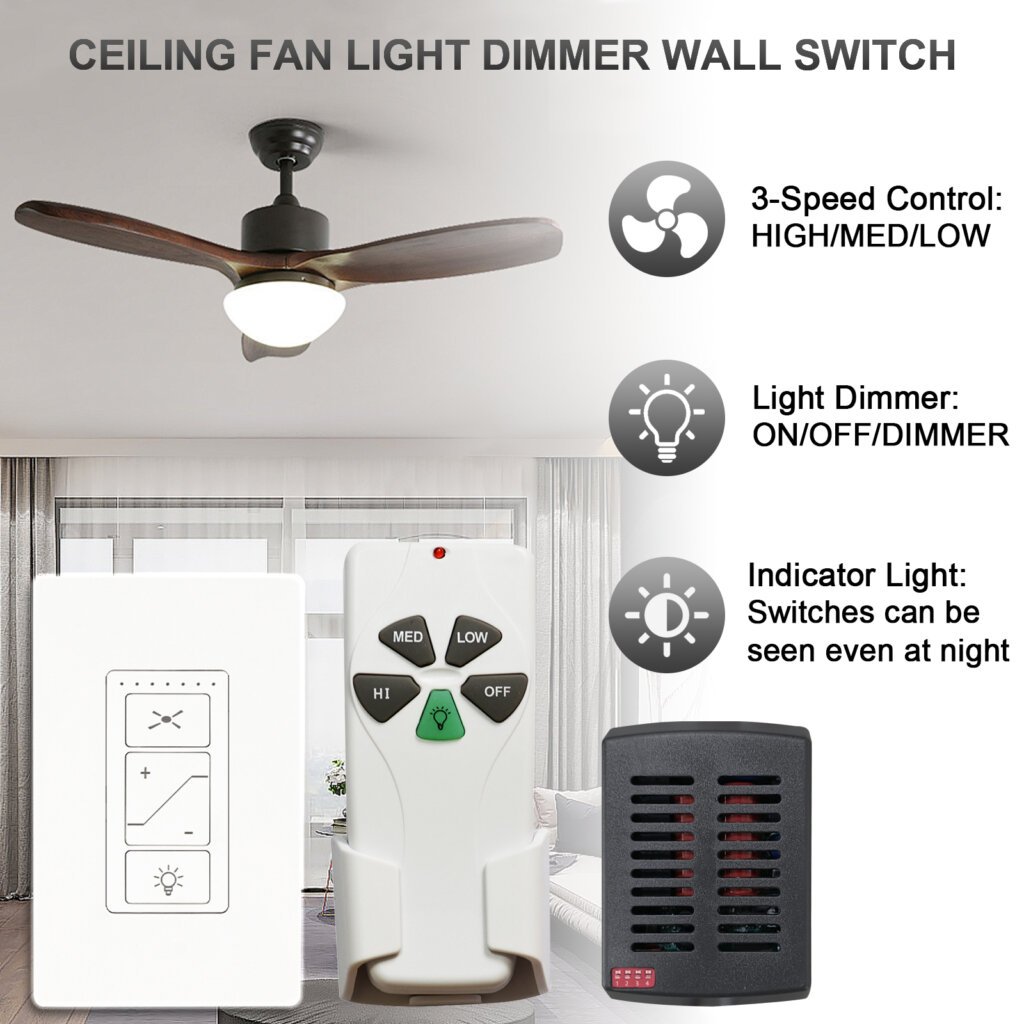
Three federal rules apply to almost every ceiling fan wall control. They are NRTL safety certification, FCC compliance, and CPSC conformity certification. Depending on your product and where you sell it, you might face extra rules.
Here is a clear breakdown:
| Certification / Standard | Who Requires It | Applies To |
|---|---|---|
| UL 60730 or UL 244A (NRTL listed) | OSHA / local building codes / retailers | All wall-mounted fan speed controls, timers, and electronic controllers |
| UL 507 (NRTL listed) | OSHA / building codes / retailers | Complete ceiling fan and control kit sold as one unit |
| FCC Part 15 Subpart B (SDoC) | FCC (mandatory federal law) | Wired wall controls with any electronic circuitry |
| FCC Part 15 Subpart C (FCC ID) | FCC (mandatory federal law) | Wireless wall controls that transmit RF signals |
| CPSC General Certificate of Conformity (GCC) | CPSC (mandatory under CPSA) | Every consumer product imported into the US |
| California Proposition 65 | State of California | Any product sold in California that may expose users to listed chemicals |
| RoHS (voluntary in US, but expected) | Retailers and marketplaces | Products sold through major US retail channels |
A simple mechanical switch with no electronics has fewer rules. However, this is rare in modern ceiling fan controls. If your product has a printed circuit board, a microcontroller, a TRIAC, or an RF transmitter, you must meet the full compliance stack.
Is UL Certification Mandatory for Ceiling Fan Wall Controls Imported Into the USA?
UL certification is not a federal law, but it is effectively mandatory in practice. Here is why.
OSHA requires a Nationally Recognized Testing Laboratory (NRTL) to certify electrical products used in workplaces. UL is the most recognized NRTL. ETL (Intertek), CSA, and TUV SUD are also accepted. Local US building inspectors check for an NRTL mark before they approve electrical installations. Major retailers like Home Depot, Lowe’s, Amazon, and Walmart require NRTL certification for any electrical product. Insurance companies may deny claims if an uncertified device causes a fire.
No federal law says you must have the UL logo. But the market and building codes make it impossible to sell without it.
For ceiling fan wall controls, the main NRTL safety standards are:
- UL 60730-1 and UL 60730-2-7: Automatic electrical controls for household use. This covers timers and wall-mounted fan speed controllers.
- UL 244A: Solid-state controls for appliances. This covers many electronic fan speed wall controls.
- UL 507: Electric fans. This applies when you sell the wall control as part of a full ceiling fan kit.
When you ask a supplier if their product is “UL certified,” always clarify the details. Find out if the complete product is UL Listed, or if only a component is UL Recognized. A UL Recognized mark on the internal relay does not make the assembled wall control compliant. You need a UL Listed mark for the finished product.
What FCC Requirements Apply to Ceiling Fan Wall Controls?
Every electronic product sold in the US must follow FCC rules under 47 CFR Part 15. For ceiling fan wall controls, the rules depend on whether the device transmits radio signals.
Wired wall controls with no wireless transmitter fall under FCC Part 15 Subpart B as unintentional radiators. These devices follow the Supplier’s Declaration of Conformity (SDoC) procedure. The manufacturer or importer must test the product for emissions and keep a compliance statement. No FCC ID is required. No US agent is required for Subpart B.
Wireless wall controls with an RF transmitter fall under FCC Part 15 Subpart C as intentional radiators. This includes 433.92 MHz, 315 MHz, 2.4 GHz Wi-Fi, Bluetooth, or Zigbee. These require an FCC ID from a recognized Telecommunication Certification Body (TCB). This process costs more and requires:
- A Grantee Code (GC) from the FCC
- A designated US Agent for service of process
- Testing by an FCC-accredited lab
- A permanent FCC ID label on the product
Here is a comparison:
| FCC Path | Applies To | Cost | US Agent Required | Marking |
|---|---|---|---|---|
| Part 15 Subpart B (SDoC) | Wired wall controls with electronics | Lower ($1,000–$3,000) | No | FCC compliance statement |
| Part 15 Subpart C (FCC ID) | Wireless wall controls (RF, Wi-Fi, Bluetooth) | Higher ($3,000–$8,000+) | Yes | FCC ID on product label |
Many importers think a CE certification for Europe covers FCC requirements. It does not. CE uses different test limits and frequency bands. You must get separate FCC testing.
How Does the NEC Affect Ceiling Fan Wall Control Compliance?
The National Electrical Code (NEC) is not a federal law. The NFPA publishes it as NFPA 70. However, every US state adopts the NEC into its building code. Your product must work with NEC installation rules to be legal in US homes.
Key NEC articles affect ceiling fan wall controls. They include:
- NEC Article 422.31: Motor-driven appliances need a disconnecting means. A wall switch that disconnects the ungrounded conductor works for ceiling fans. Your design must have a true off position, or work with a separate disconnect.
- NEC Article 404: Covers switch installations. It requires grounded circuit conductors at switch locations. This matters for smart controls that need a neutral wire.
- NEC Article 300: Covers wiring methods and materials. This affects how you design the wall control’s terminals and wire leads.
- NEC Article 110.3(B): Listed products must be installed according to their instructions. If your instructions conflict with the NEC, installers cannot legally use your product.
As an importer, you must ensure your wall control meets these rules:
- Has an NRTL listing recognized by US building inspectors.
- Includes clear English instructions that match NEC rules.
- Is rated for 120V / 60Hz operation.
- Has proper conductor ratings for US wire gauges (typically 14 AWG or 12 AWG).
- Fits standard US single-gang or multi-gang wall boxes.
What CPSC Requirements Do Importers Need to Know?
The Consumer Product Safety Commission (CPSC) enforces the Consumer Product Safety Act (CPSA). Under 16 CFR Part 1110, every imported consumer product needs a General Certificate of Conformity (GCC).
The GCC must state that the product complies with all CPSC safety rules. For ceiling fan wall controls, the certificate must reference:
- The applicable UL standard tested (e.g., UL 60730)
- The third-party lab that did the testing
- The manufacturer and importer information
- The date and place of manufacture
- Contact details for the person keeping the test records
The GCC must accompany the shipment. You must show it to CPSC and Customs and Border Protection (CBP) if they ask. You do not need to file it early, but you must have it ready.
The importer must also put a permanent tracking label on the product. It needs:
- Manufacturer name
- Model number
- Date of manufacture
- Country of origin
- Electrical ratings (voltage, frequency, current or wattage)
How Do I Verify My Overseas Supplier’s Certifications Are Legitimate?
Fake certifications are a serious problem in the electrical product import industry. Importers lose entire container loads because suppliers provide fake UL certificates. Here is a practical verification process:
Step 1 — Request the original test report, not just the certificate. A certificate is a one-page summary. The test report is a detailed document. It is often 20 to 50 pages long. It shows every test performed, the results, and photos of the sample. If your supplier cannot produce the full report, walk away.
Step 2 — Verify the UL file number online. Go to the UL Product iQ database (productiq.ul.com) and enter the UL file number. The database will show the manufacturer’s name, product category, and scope of certification. If the entry does not match your supplier or product exactly, the certificate is fake.
Step 3 — Check the FCC ID database. For wireless products, go to fcc.gov/oet/ea/fccid and enter the FCC ID. If no record exists, the product has no real certification.
Step 4 — Verify the test laboratory’s accreditation. The lab that did the NRTL testing must be OSHA-recognized. Check the OSHA NRTL directory to confirm. For FCC testing, verify the lab is ISO/IEC 17025 accredited and FCC-recognized.
Step 5 — For large orders, commission your own pre-shipment compliance testing. Pull a random sample from production. Send it to a US-based NRTL or FCC-accredited lab for verification. This usually costs $1,000 to $4,000. That is cheap compared to a rejected shipment or product recall.
What Documentation Do I Need at US Customs for Ceiling Fan Wall Controls?
When your shipment arrives at a US port, CBP will expect specific documents. Here is what you should prepare:
| Document | Purpose | Required or Recommended |
|---|---|---|
| Commercial Invoice | Declares value, quantity, country of origin | Required |
| Packing List | Details of each carton/pallet | Required |
| Bill of Lading (ocean) or Air Waybill (air) | Transport document | Required |
| Importer Security Filing (ISF-10+2) | Filed before vessel departure | Required for ocean freight |
| General Certificate of Conformity (GCC) | CPSC compliance evidence | Required (have ready) |
| FCC SDoC or FCC ID certificate | FCC compliance evidence | Required (have ready) |
| NRTL certification documentation | UL/ETL/CSA listing proof | Strongly recommended |
| Product test reports | Full compliance record | Recommended |
| Country of origin marking | On product and packaging | Required |
The correct Harmonized Tariff Schedule (HTS) code for most ceiling fan wall controls is 8536.50. This covers electrical switches under 1,000 volts. If your wall control comes in a kit with a receiver, it may fall under 8414.90 as a ceiling fan part. Always ask a licensed customs broker to find the right HTS code and duty rate for your product.
What Are the Most Common Compliance Mistakes Importers Make?
After years in the industry, I have seen the same mistakes trip up importers. Here are the ones to avoid:
Mistake 1 — Assuming CE equals US compliance. CE certification is for Europe. It uses different standards, voltage limits, and test rules. A CE-marked product is not automatically legal in the US. You need separate NRTL and FCC testing for the American market.
Mistake 2 — Only certifying the receiver, not the wall control. Some importers get the ceiling fan receiver UL listed. They assume the wall control is covered. It is not. The wall-mounted control is a separate device. It needs its own certification, especially if it has different circuitry.
Mistake 3 — Not having a US Agent for FCC ID certification. If your product has an RF transmitter, FCC Part 15 Subpart C requires a US Agent. Without one, the TCB cannot issue your FCC ID. Many overseas suppliers do not tell you this.
Mistake 4 — Wrong voltage and frequency design. Products made for 220V/50Hz markets will fail or cause safety hazards on US 120V/60Hz systems. Verify that your wall control is designed and tested for 120V/60Hz.
Mistake 5 — Incomplete product labeling. US rules require specific markings on the product. These include the NRTL mark, electrical ratings, manufacturer name, model number, date code, and country of origin. Missing labels can cause customs to reject your goods or retailers to return them.
Mistake 6 — Skipping pre-shipment inspection. Trusting supplier certificates without checking them is a fast path to disaster. At minimum, verify certificates online before shipping. For larger orders, pay for pre-shipment testing.
How Do Compliance Requirements Differ Between Wired and Wireless Wall Controls?
Importers planning a product line often ask this question. The compliance path is very different for each type:
| Factor | Wired Wall Control (No RF) | Wireless Wall Control (RF Transmitter) |
|---|---|---|
| NRTL Safety Standard | UL 60730 or UL 244A | UL 60730 or UL 244A (same) |
| FCC Path | Part 15 Subpart B (SDoC) | Part 15 Subpart C (FCC ID required) |
| FCC Cost | Lower | Higher (2–3x) |
| US Agent Required | No | Yes |
| FCC Label Required | Compliance statement on product/packaging | FCC ID on product label |
| Battery Considerations | Not applicable | Battery safety testing may apply (UL 4200A for button/coin cells) |
| Interference Risk | Low | Must not interfere with other devices and must accept interference |
If you sell both types, budget separately for each FCC path. The wireless product will take longer and cost more to certify. If your wireless wall control uses a coin or button cell battery, you must also follow Reese’s Law (16 CFR Part 1263). This rule covers battery compartment security and warning labels.
FAQ
Does a ceiling fan wall control need its own UL listing if the receiver is already UL listed?
Yes. The wall control and receiver are separate products in different locations. They have different risks. A UL-listed receiver does not cover the wall-mounted control. The wall control needs its own evaluation. It usually must meet UL 60730 or UL 244A and bear its own NRTL mark.
Can I use my supplier’s CE test report for FCC compliance?
No. CE testing uses European EMC standards. These have different limits and conditions than FCC Part 15. You might use some data as a reference, but you still need FCC-specific testing. An FCC-recognized lab must perform the tests and issue a valid FCC SDoC or FCC ID.
What happens if CBP finds my shipment lacks proper certification?
Customs and Border Protection can detain your shipment and ask for compliance documents. They can seize non-compliant goods or order them sent back. You may also face fines. The CPSC can stop non-compliant products at the border. They can also issue mandatory recalls for products already in stores.
Is ETL certification as good as UL for ceiling fan wall controls?
Yes. ETL (Intertek) and UL are both OSHA-recognized NRTLs. ETL tests to the same UL standards. Building inspectors, retailers, and insurance companies accept both. ETL certification can be faster and less expensive. This makes it a practical choice for importers.
Do I need to worry about California Proposition 65?
If you sell your wall control in California, you must check Proposition 65 rules. Products circulate everywhere, so you should check this even if you sell across the US. Plastic housings, PVC wire insulation, solder, and brass terminals can contain listed chemicals. You might need a warning label. Better yet, make sure your product stays below safe limits.
How long does the full certification process take for a new ceiling fan wall control?
Plan for 8 to 16 weeks for NRTL safety testing. Add 4 to 8 weeks for FCC testing, assuming no failures. FCC ID certification for wireless products adds 2 to 4 more weeks. You also need time for label design, manuals, and factory setup. A realistic timeline is 3 to 6 months for a new product.
Conclusion
Importing ceiling fan wall controls into the US requires clearing three major checkpoints. You need NRTL safety certification, FCC compliance, and CPSC conformity. If you cut corners, you risk your shipment, your business, and your reputation. The good news is that proper planning makes this easy. Verify your supplier documents and do your pre-shipment checks. Then you can bring compliant products into the US market with confidence.
For practical ceiling fan control solutions built with compliance in mind, visit huashifs.com. Explore our product range and learn what makes a reliable ceiling fan wall control.

So,I like it